
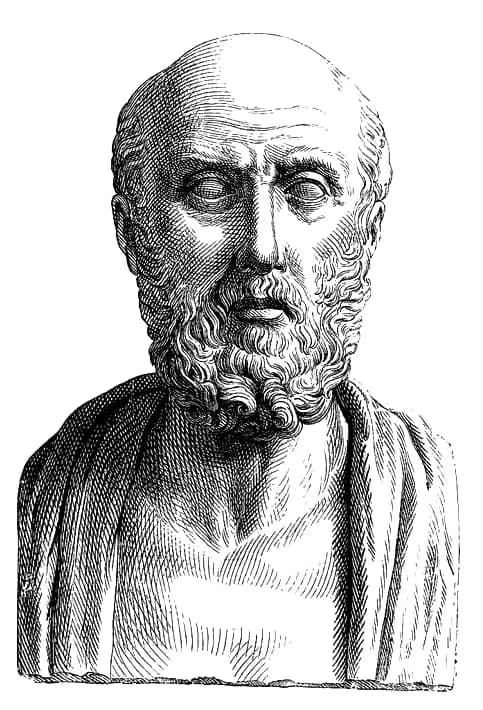
Hippocrates
Hippocrates was the most influential physician of classical Greece and the figure later tradition called the “Father of Medicine.” Associated with the medical school of Kos and the writings known as the Hippocratic Corpus, he helped shape medicine into a disciplined craft grounded in careful observation, prognosis, and natural (non-magical) explanation. His legacy is less a single doctrine than a method: describe the body honestly, track patterns over time, and treat illness with humility, restraint, and ethical seriousness.
Key facts
- Traditionally known as the “Father of Medicine” in the Western tradition
- Associated with the medical school of Kos and the lineage of Asclepiad physicians
- Linked to the Hippocratic Corpus (a collection of medical treatises from his era and later)
- Helped establish clinical observation, prognosis, and case-based reasoning as medical standards
- Remembered for the ethical ideal later expressed in the Hippocratic Oath (“do no harm” as a guiding spirit)
Early life
Hippocrates was born on the island of Kos, a center of healing practice tied to the cult of Asclepius and to families of hereditary physicians. In a Greek world where illness could be blamed on divine punishment or ritual impurity, the medical culture around Kos also cultivated practical knowledge: diet, regimen, anatomy by inference, and close study of symptoms. Hippocrates’s formation likely combined apprenticeship, travel, and immersion in competing approaches to healing across the Aegean.
Rise to prominence
Hippocrates’s reputation grew through the success of his practice and, more importantly, through the prestige of a medical approach that aimed at explanation, prediction, and disciplined care. The tradition associated with his name emphasized watching the patient over time—fevers, crises, recoveries—and learning the “course” of diseases. This focus on prognosis made medicine intellectually credible: the physician was not merely reacting, but understanding patterns and guiding treatment with measured judgment.
Religion & philosophy
Hippocrates lived within the polytheistic religious world of Greece, where temples, oracles, and healing cults were common. Yet the medical approach tied to his name is famous for pushing illness toward natural causes—environment, diet, season, constitution—rather than attributing every condition to the gods. This did not necessarily deny religion; it re-centered responsibility on human inquiry and the regularities of nature, making medicine a craft of reasoning as much as ritual.
Challenges
Practicing medicine in the 5th and 4th centuries BCE meant working with limited instruments, no germ theory, and only partial anatomical knowledge. Physicians also competed with folk healers, temple cures, and persuasive charlatans. A major challenge was epistemic: how to make reliable claims from messy symptoms and inconsistent outcomes. The Hippocratic tradition answered with discipline—careful observation, cautious intervention, and a preference for treatments that supported the body rather than violently overriding it.
Legacy
Hippocrates became a symbol of medicine as a rational and ethical vocation. The Hippocratic tradition shaped later Greek and Roman medicine, influenced Islamic medical scholarship, and helped define clinical ideals that persist: case histories, differential judgment, the primacy of observation, and professional ethics. Even where Hippocratic theories (like strict humoral explanations) were revised or replaced, the deeper legacy remained: medicine should be accountable to evidence, guided by prudence, and practiced with moral restraint.
Death and succession
Hippocrates is traditionally said to have died in advanced age in Thessaly (often linked to Larissa), though ancient biographies mix fact and legend. He founded no formal “school” in the modern sense, but his successors were the physicians and writers who expanded the Hippocratic Corpus and carried its clinical attitude forward. Later figures—especially Galen—systematized medicine on a grand scale, yet still treated Hippocrates as the enduring emblem of the physician’s craft and conscience.