
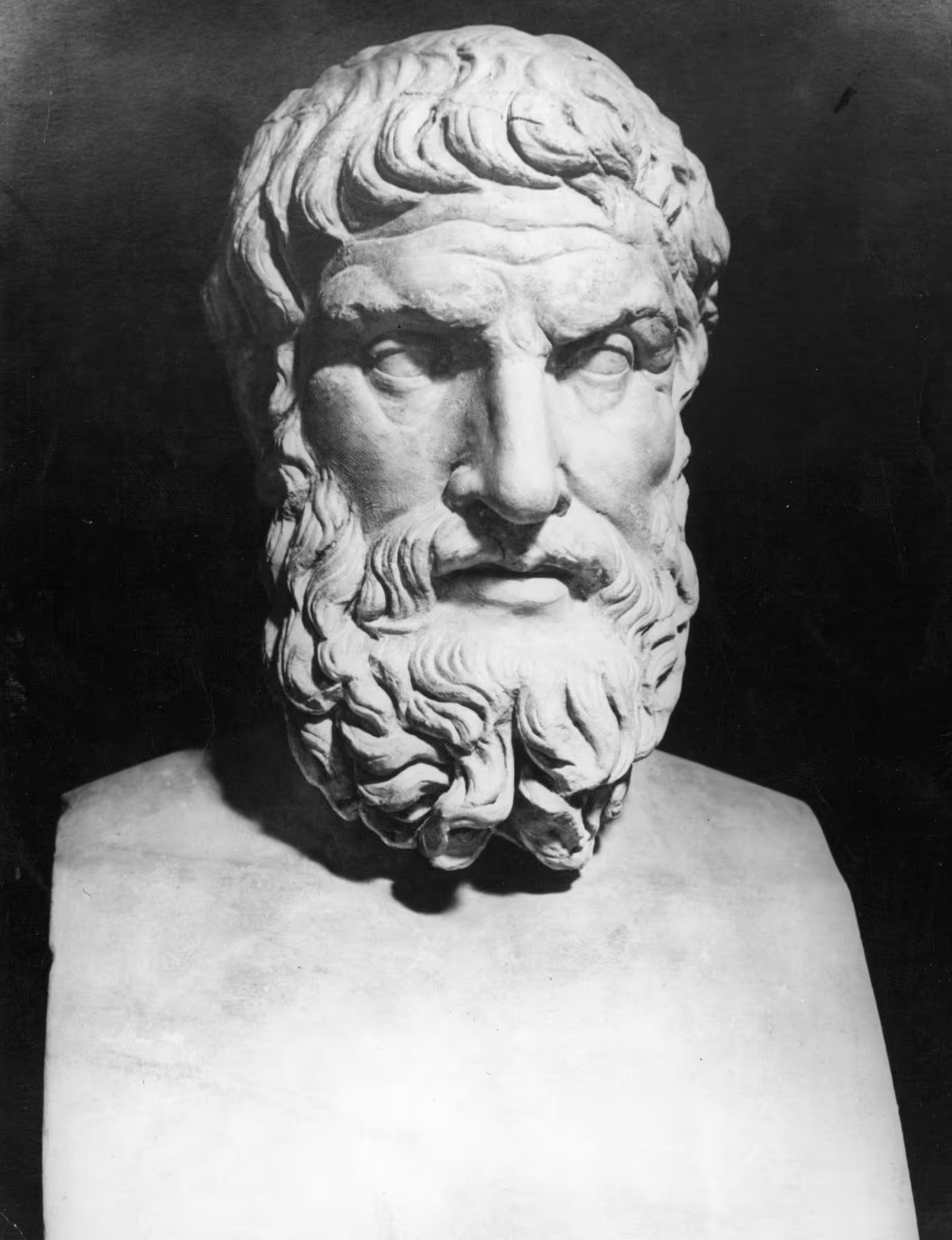
Lucretius
Titus Lucretius Carus was a Roman poet-philosopher whose masterpiece On the Nature of Things (De Rerum Natura) presented Epicurean philosophy in the form of a grand didactic poem. He argued that the universe is made of atoms and void, that natural causes—not divine interventions—explain the world, and that understanding nature frees human beings from superstition and the fear of death. By combining rigorous argument with extraordinary poetic power, Lucretius created one of history’s greatest works of philosophical literature: a rational vision of reality written to calm the soul and liberate the mind.
Key facts
- Roman poet-philosopher and the great Latin voice of Epicureanism
- Author of De Rerum Natura (On the Nature of Things), a philosophical epic in six books
- Defended atomism: reality consists of atoms moving in the void under natural laws
- Argued that fear of death and superstition are primary sources of human misery
- Influenced later science, secular thought, and Renaissance/Enlightenment naturalism
Early life
Very little is securely known about Lucretius’s life, and later biographies mix rumor with legend. He lived during the violent final century of the Roman Republic, a period marked by civil conflict, political ambition, and social anxiety. His education was clearly high, and his work shows deep familiarity with Greek philosophy, especially Epicurus and his followers. The poem suggests a writer motivated by a moral mission: to heal the mind by teaching nature truthfully and fearlessly.
Rise to prominence
Lucretius’s prominence comes almost entirely from his poem, which likely circulated among educated Roman readers and was later associated with influential figures (including, traditionally, Cicero as an editor or early admirer). On the Nature of Things stands out by its ambition: it translates difficult Greek philosophical arguments into Latin with clarity, intensity, and beauty. Rather than presenting philosophy as a narrow school doctrine, Lucretius frames it as liberation—an awakening from terror, illusion, and servitude to irrational fears.
Religion & philosophy
Lucretius’s philosophy is resolutely anti-superstitious. He did not deny the existence of gods in an Epicurean sense, but he argued that they do not govern the world, punish humans, or require rituals to secure favor. The cosmos, for Lucretius, runs by natural processes, and human beings suffer when they project fear and desire onto imagined divine control. His aim is not mere disbelief but peace: once nature is understood, the mind is freed from dread and manipulation.
Challenges
Lucretius faced the challenge of teaching a controversial philosophy in a society where religion, tradition, and political authority were deeply intertwined. Epicureanism was often misunderstood as hedonistic or socially corrosive, and its rejection of providential gods could be seen as threatening. He also confronted the intellectual difficulty of making invisible realities—atoms, void, the structure of perception—persuasive without modern instruments. His solution was poetic argument: vivid analogies, relentless reasoning, and emotional force aimed at breaking the spell of superstition.
Legacy
Lucretius became a central conduit through which ancient atomism and Epicurean naturalism reached later centuries. His poem influenced Renaissance humanists, early modern science, and Enlightenment critiques of superstition by offering a powerful alternative worldview: nature is intelligible, fear is conquerable, and ethics can be grounded in understanding rather than divine threat. Even readers who reject his conclusions often recognize his achievement: he made a philosophical system feel like a liberation of the human spirit.
Death and succession
Lucretius likely died in the mid-1st century BCE. Few details survive, and later claims about the circumstances of his death are uncertain and often treated with skepticism. His “successors” were less a formal school than a long chain of readers—Epicureans, humanists, scientists, poets—who rediscovered in his work a blueprint for explaining the world naturally and living with calm courage in the face of mortality.