
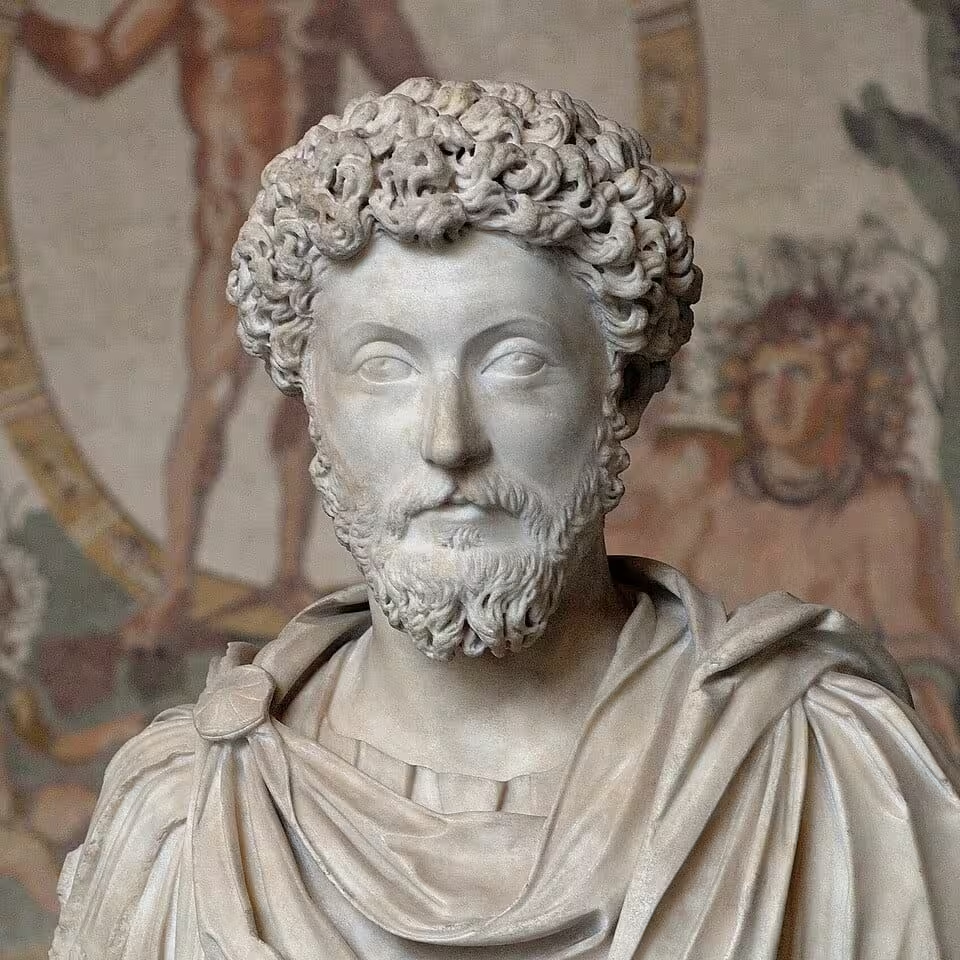
Marcus Aurelius
Marcus Aurelius was a Roman emperor and Stoic philosopher, remembered as the “philosopher-king” whose private notes became Meditations—one of the most enduring works of practical philosophy ever written. Ruling during wars, plague, and political strain, he tried to live Stoicism under maximum pressure: discipline of desire, mastery of fear, devotion to duty, and kindness without softness. Meditations is not a treatise meant to impress the world; it is a training manual for the soul—an emperor reminding himself that power, reputation, and even life are fragile, and that virtue is the only reliable good.
Key facts
- Roman emperor (161–180 CE) and the most famous Stoic ruler in history
- Author of Meditations, a private journal of Stoic reflections and self-discipline
- One of the “Five Good Emperors,” associated with stable administration and civic duty
- Ruled during major crises: frontier wars (Marcomannic Wars) and the Antonine Plague
- Stoic themes: virtue, duty, impermanence, rational self-command, and universal human kinship
Early life
Marcus Aurelius was born into a prominent Roman family and was marked out early for leadership. He received an elite education in rhetoric, law, and philosophy and was adopted into the imperial succession by Antoninus Pius under Hadrian’s arrangements. Drawn strongly to Stoicism, Marcus studied with leading teachers and practiced an austere personal discipline even as he was prepared for the highest office. His youth formed the central tension of his life: how to reconcile inner philosophical integrity with the demands of public power.
Rise to prominence
Marcus rose to prominence through the carefully managed Roman system of adoption and succession. As heir, he learned governance alongside Antoninus Pius and entered imperial responsibility gradually. When he became emperor, he shared rule with Lucius Verus and soon faced continuous external threats and internal stress. Unlike many rulers who treat philosophy as ornament, Marcus treated it as an operating system: a way to endure adversity, make decisions under uncertainty, and keep personal ego from corrupting judgment.
Religion & philosophy
Marcus lived within traditional Roman religion and supported the civic religious order that held the empire together. His Stoicism, however, framed divinity in a more philosophical way—emphasizing providence, the rational structure of nature, and the moral duty to live in accordance with reason. In Meditations he often speaks in terms compatible with both a providential cosmos and a more impersonal natural order. What matters most is practical: accept what is given, act justly, and remain inwardly free.
Challenges
Marcus Aurelius governed amid relentless pressure: frontier invasions and long wars, a devastating plague, economic strain, and the burdens of administration across a massive empire. The moral challenge was equally severe: how to wield coercive power without becoming cruel, how to punish without hatred, and how to remain calm when surrounded by flattery, faction, and fear. Meditations records his internal struggle—repeatedly returning to first principles: impermanence, duty, patience, and the refusal to be ruled by anger or vanity.
Legacy
Marcus Aurelius left a dual legacy: as a ruler who embodied a serious ideal of duty, and as a writer whose private spiritual exercises became a public treasure. Meditations has influenced statesmen, soldiers, therapists, entrepreneurs, and ordinary readers seeking steadiness under pressure. His Stoicism offers a timeless model of resilience: focus on what you can control (your judgments and actions), treat others fairly, and accept the rest with dignity. Historically, his reign is often seen as the end of Rome’s golden age, adding poignancy to his insistence that all human greatness passes quickly.
Death and succession
Marcus Aurelius died in 180 CE during the Danubian campaigns. His succession to Commodus is often portrayed as a tragic contrast: from philosophical discipline to imperial indulgence. Marcus founded no school, but his successors are the countless readers who use Meditations as a handbook for character—proof that philosophy can be lived even at the center of power.