
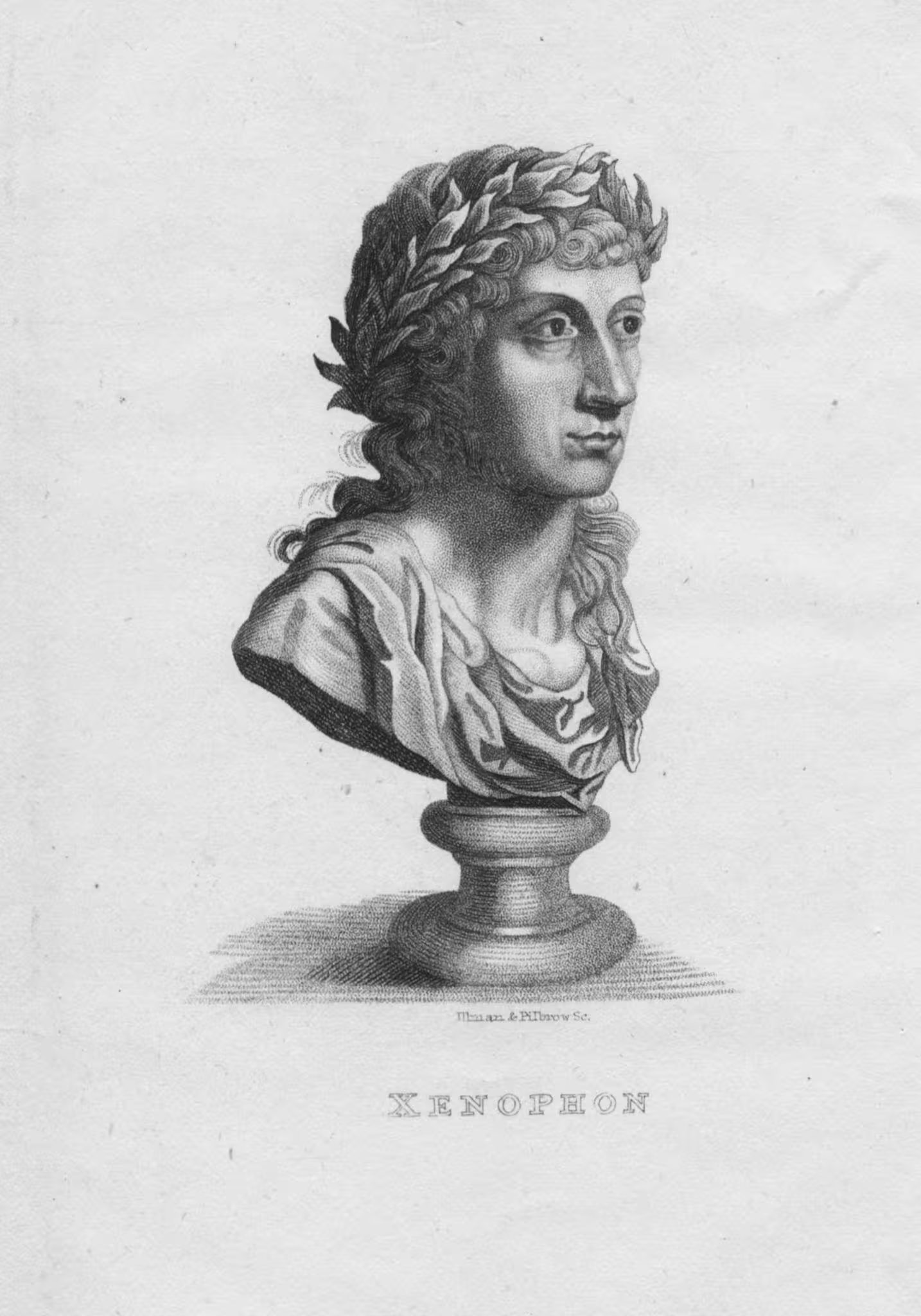
Xenophon
Xenophon was an Athenian soldier, historian, and Socratic writer whose works sit at the intersection of philosophy, leadership, and practical life. A student of Socrates and a veteran of extraordinary campaigns, he wrote with a rare blend of clarity and realism: how men actually behave under fear, hunger, ambition, loyalty, and command. His Anabasis is both an adventure and a leadership manual; his Memorabilia preserves Socrates in a pragmatic, ethical light; and his Cyropaedia explores the psychology of rulership and statecraft. Xenophon’s enduring value is his “usable wisdom”: moral seriousness expressed through scenes, decisions, and lived experience rather than abstract theory.
Key facts
- Athenian writer and soldier; one of the most readable prose stylists of classical Greece
- Student of Socrates and major source for Socratic ethics (Memorabilia)
- Author of Anabasis, a firsthand account of the “March of the Ten Thousand”
- Wrote Hellenica, continuing Greek history after Thucydides
- Explored leadership and political order in Cyropaedia and other practical works
Early life
Xenophon was born in Athens into a relatively well-off family and came of age during the long crisis of the Peloponnesian War. He encountered Socrates in his youth and absorbed a form of philosophy grounded in character, self-control, and the everyday demands of living well. Unlike many philosophers, Xenophon’s education was not only civic and intellectual but also martial: he learned the disciplines of endurance, command, and responsibility that later became central themes across his writing.
Rise to prominence
Xenophon’s reputation was secured by experience as much as by books. He joined the Greek mercenary expedition that marched deep into Persia and, after disaster struck, emerged as one of the leaders who helped bring the army home—an achievement he narrated in Anabasis with gripping tactical detail and psychological insight. His later writings expanded his influence: he offered history (Hellenica), moral portraiture (Memorabilia), and systematic reflections on leadership, economics, and civic discipline. He became famous because he could teach through narrative: not merely what happened, but what a competent person should do when the situation turns against him.
Religion & philosophy
Xenophon wrote within the religious world of Greek polytheism, and his works regularly mention sacrifices, omens, and divine favor as part of how armies and cities understood risk. Yet his overall temperament is practical and ethical rather than mystical: he records religious practice as a real force in decision-making while keeping attention on human virtues—prudence, courage, moderation, and loyalty. In his writing, religion often appears as one element within a broader discipline of judgment and self-command.
Challenges
Xenophon lived through political upheaval, factional conflict, and war, and his own life carried the tensions of loyalty and exile. As an Athenian who developed strong ties to Sparta and served in contexts that Athens viewed suspiciously, he faced the problem of identity in a divided Greek world. Intellectually, his challenge was to preserve Socratic ethics without turning them into abstract doctrine, and to write about power without romanticizing it. His work repeatedly returns to a hard question: how to remain decent and competent when circumstances punish the weak and reward opportunists.
Legacy
Xenophon left a legacy of practical classics: clear prose, vivid scenes, and moral instruction through lived examples. He shaped later ideas about leadership, military discipline, and civic education, and his portrait of Socrates remains indispensable alongside Plato’s. Modern readers value him because he is not merely theoretical—he shows how leadership is earned, how morale is maintained, how communities survive stress, and how character is tested when comfort disappears. If Plato gives you the heights of philosophy, Xenophon gives you the ground-level training of judgment.
Death and succession
Xenophon likely died in the mid-4th century BCE. He founded no school, but his successors are the historians, commanders, and educators who treat narrative as a vehicle for moral and strategic training. Across centuries, Anabasis has been read as a manual of endurance and leadership under pressure, and Memorabilia as a sober guide to Socratic virtue lived in ordinary life.