
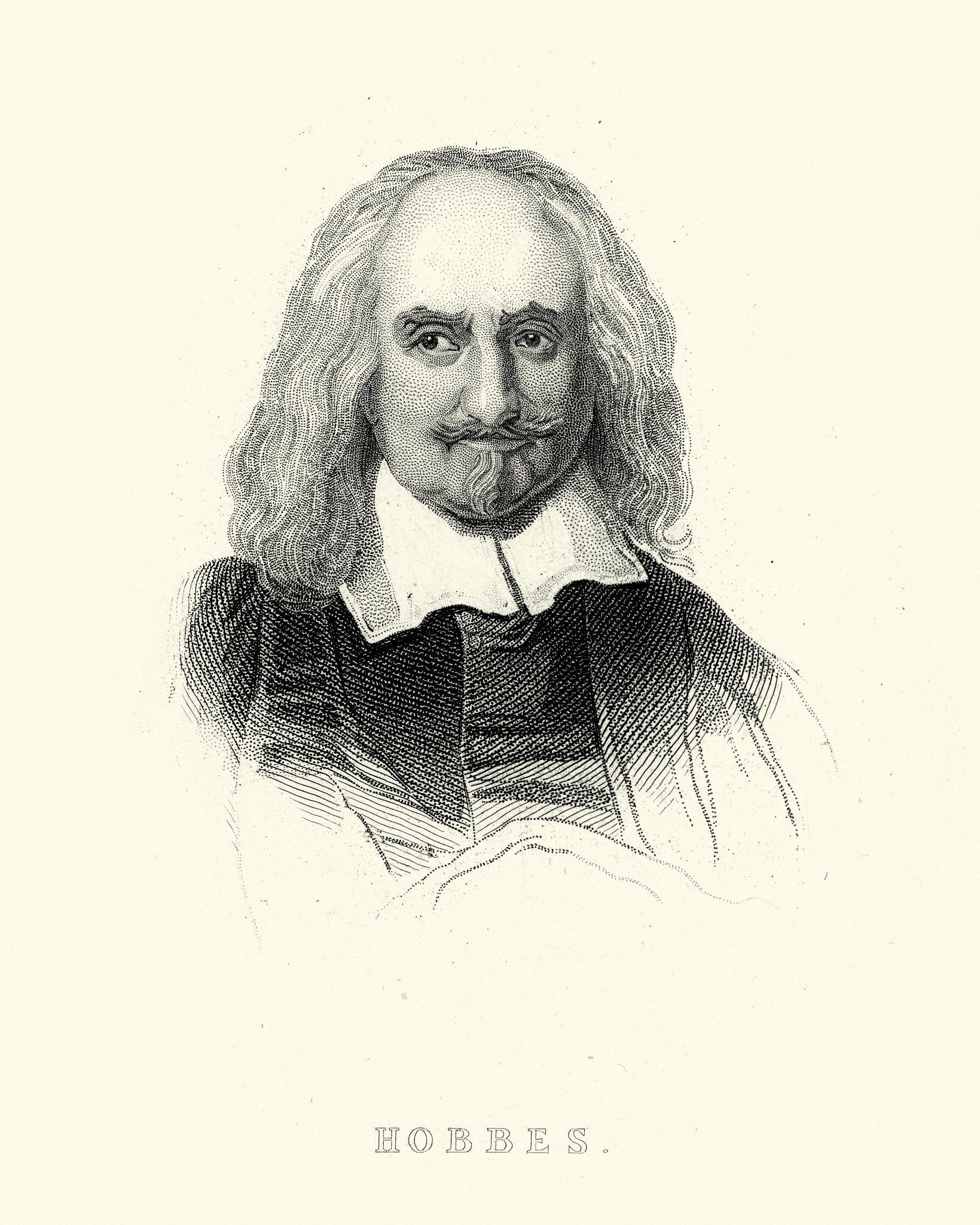
Leviathan
Leviathan, or The Matter, Forme and Power of a Common-wealth Ecclesiasticall and Civil
Hobbes’ masterpiece argues that peace requires a strong sovereign: without common authority, fear and distrust produce a war of all against all.
Summary
Hobbes’ Leviathan is political philosophy written under the shadow of civil war. It begins with a bleak diagnosis: conflict isn’t mainly caused by monsters—it’s caused by ordinary human beings placed in conditions of mistrust, competition, and fear.
Hobbes starts with human psychology. People want to preserve themselves, they desire power to secure their future, and they are roughly equal in the ability to harm one another. Even if one person is stronger, others can unite or strike indirectly. When you combine equality of vulnerability with scarcity, pride, and uncertainty, you get a dangerous situation: everyone has reason to distrust everyone.
This is Hobbes’ famous state of nature: a condition without a common authority to enforce rules. In such a condition, Hobbes argues, life tends toward a “war of every man against every man”—not constant fighting, but constant insecurity. When you can’t rely on protection, you preempt. When you can’t trust contracts, cooperation collapses. And when fear dominates, the arts of civilization—trade, learning, long-term projects—wither.
Hobbes then introduces the social contract. People can escape the warlike condition by agreeing to transfer certain rights—especially the right to enforce their own judgment by force—to a sovereign power. The sovereign can be a monarch or an assembly; the form matters less than the fact of centralized authority. The sovereign’s job is to create stable law, enforce contracts, and keep peace.
A key move is Hobbes’ concept of authorization: the sovereign acts as the representative of the people’s will because the people have authorized it. Once authorized, the sovereign must have enough power to deter rebellion and punish violations; otherwise it can’t do the job.
Hobbes’ view of rights is severe. The most basic right is self-preservation. But many other freedoms must be limited for security. In exchange, the sovereign offers protection. If the sovereign cannot protect you, obligation weakens—because the contract’s purpose is safety.
Hobbes also devotes major attention to religion and ideological conflict. Competing spiritual authorities and private interpretations can fracture loyalty, producing civil war. Hobbes tries to bring religious power under civil authority, arguing that divided sovereignty is a recipe for violence.
The final impression is hard and lasting: Hobbes is not celebrating tyranny for fun. He is offering a grim bargain: order first, liberty second, because without order, liberty becomes meaningless. Leviathan forces you to confront the foundational political question: what level of power is necessary to prevent society from tearing itself apart?
Key ideas
Notable quotes
- ““The life of man [is] solitary, poor, nasty, brutish, and short.””
- ““War of every man against every man.””
- ““Covenants, without the sword, are but words…””
- ““The sovereign is he that hath the right to command.””
- ““Authority, not truth, makes the law.””
Why it matters today
*Leviathan* matters because it explains the political physics of distrust. In any society where enforcement breaks down—failed states, gang rule, civil war, extreme polarization—Hobbes’ logic reappears: fear dissolves cooperation, and people trade liberty for security. Hobbes also helps you see why institutions matter: law is not just moral talk, it’s enforcement and credibility. Even if you reject Hobbes’ appetite for strong sovereignty, you cannot ignore his central lesson: peace is fragile, and order is expensive—but anarchy is more expensive.
Recommended for
- Readers who want the most powerful argument for political order and sovereignty
- Anyone studying legitimacy, authority, and the problem of civil conflict
- Students comparing Hobbes vs. Locke vs. Rousseau
- People interested in how fear, incentives, and distrust shape society
- Leaders thinking about governance under high-stakes instability