
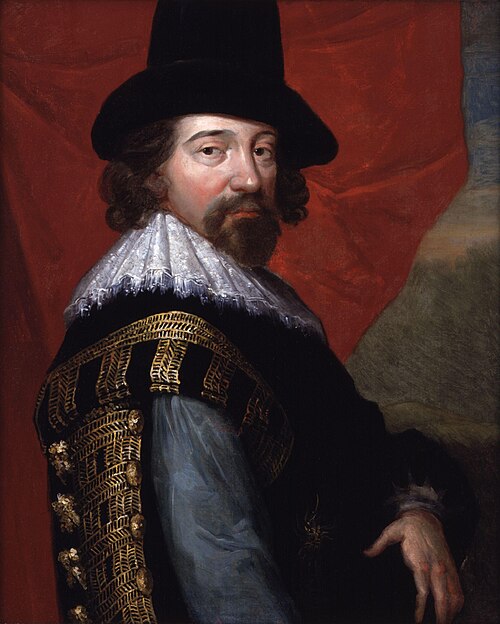
Novum Organum
Novum Organum, sive Indicia Vera de Interpretatione Naturae
Bacon’s blueprint for a new way of knowing: replace sterile debate with disciplined observation, experiment, and a method that protects the mind from its own illusions.
Summary
Francis Bacon wrote Novum Organum as a declaration of war against intellectual stagnation. In his view, Europe had plenty of cleverness but too little progress: arguments multiplied while nature remained unconquered. The problem was not lack of intelligence—it was a broken method.
Bacon targets the dominant style of learning he associated with scholasticism: reasoning that starts with abstract principles, then uses syllogisms to squeeze conclusions out of words. This can produce impressive debate, but it does not reliably produce new knowledge about the world. Bacon’s alternative is a new “instrument” (organon) for the mind: a disciplined way of moving from experience to trustworthy general principles.
At the heart of the book is Bacon’s defense of induction—but not the naive kind that leaps from a few examples to a sweeping claim. Bacon wants a slow, structured ascent. Instead of asking nature questions with pride, he wants investigators to build tables of observation: cases where a phenomenon appears, cases where it does not, and cases where it varies by degree. The aim is to narrow possibilities, eliminate false explanations, and approach causes through controlled comparison.
What makes Novum Organum feel modern is its psychological realism. Bacon argues that the mind is not a neutral lens. It is active, impatient, and easily bewitched by patterns. So he introduces his most famous doctrine: the Idols—systematic sources of error that distort thought.
- Idols of the Tribe: errors built into human nature—our hunger for order, our tendency to see patterns too quickly, our preference for confirming evidence. - Idols of the Cave: personal distortions—temperament, education, habits, and private obsessions that make each mind a biased “cave.” - Idols of the Marketplace: errors from language—words that confuse, oversimplify, or smuggle assumptions into debate. - Idols of the Theater: errors from intellectual systems—beautiful philosophies and dogmas performed like plays, convincing by elegance rather than truth.
Bacon’s point is severe: without a method designed to resist these idols, even brilliant people will build castles on sand. The solution is not “think harder.” The solution is procedural humility: collect evidence, test claims, distrust premature certainty, and let nature answer.
Read as a whole, Novum Organum is not a lab manual. It is a moral and intellectual reformation: knowledge should be public, repeatable, and corrigible. The goal is not to win arguments, but to discover causes and generate power over nature through understanding—an approach that helped set the tone for modern science.
Key ideas
Notable quotes
- ““Man, the servant and interpreter of nature, can do and understand so much and so much only…””
- ““The human understanding is like an uneven mirror…””
- ““Truth is the daughter of time, not of authority.””
- ““The idols and false notions… have taken possession of the human understanding…””
- ““If a man will begin with certainties, he shall end in doubts; but if he will be content to begin with doubts, he shall end in certainties.””
Why it matters today
*Novum Organum* matters because the modern world runs on Bacon’s insight: reality punishes wishful thinking. We still suffer from the Idols—confirmation bias, tribal narratives, language games, and beautiful theories that collapse under data. Bacon gives a durable remedy: build procedures that force contact with evidence, reward correction, and slow down overconfident minds. It’s a book about intellectual hygiene—how to keep the pursuit of truth from being hijacked by ego, fashion, and premature certainty.
Recommended for
- Readers who want the origins of the modern scientific attitude
- Anyone interested in bias, rationalization, and how minds fool themselves
- Founders, engineers, and builders who want a method for learning from reality
- Students of philosophy of science and intellectual history
- People who want a disciplined alternative to pure “armchair reasoning”