
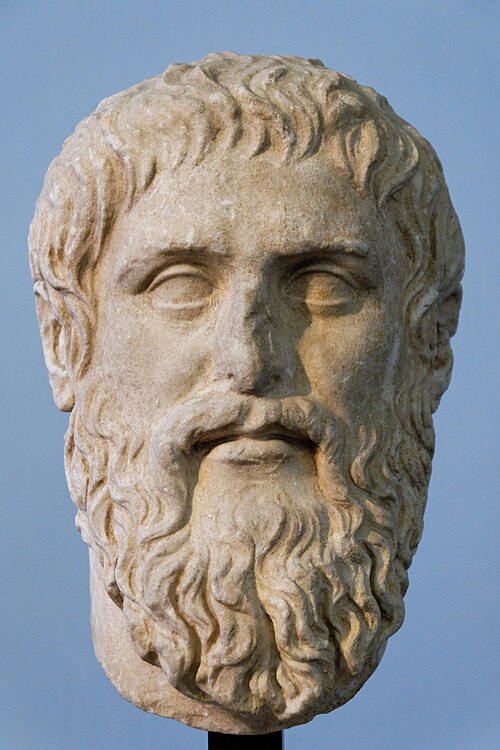
Apology
Ἀπολογία Σωκράτους (Apologia Sōkratous)
Socrates defends his life and mission in court, arguing that truth, conscience, and the examined life matter more than safety, status, or popularity.
Summary
Plato's Apology is not an apology in the modern sense. It is a defense speech—Socrates speaking in court as he is tried for impiety and for "corrupting the youth." The power of the book is that it shows philosophy under real pressure: not as classroom theory, but as something a person is willing to suffer for.
Socrates begins by addressing the deeper problem behind the formal charges: his reputation. For years, he has been portrayed as a dangerous sophist—someone who twists words and undermines belief. He insists he is not a paid teacher, not a manipulator, and not interested in winning through theatrics. Instead, he tells a strange origin story: a friend once asked the Delphic oracle whether anyone was wiser than Socrates. The oracle said no. Socrates did not interpret this as praise, but as a riddle.
To test it, he questioned politicians, poets, and craftsmen—people thought to be wise. He discovered a pattern: many had confidence without clarity. They could speak impressively, but when pressed, their claims dissolved into contradiction. Socrates concluded that if he is "wiser," it is only in this sense: he does not pretend to know what he does not know.
This habit—public questioning—made him enemies, especially among influential men embarrassed in front of younger listeners. Socrates argues he has been treated like a moral nuisance, a "gadget" that exposes complacency. Yet he frames his work as a civic service: he awakens people to the real priority—care for the soul. Wealth and status are secondary; character and truth come first.
When the court finds him guilty, Socrates refuses the usual posture of pleading for mercy. He won't bring his family forward for emotional leverage, and he won't promise to stop philosophizing to save his life. He suggests, almost provocatively, that what he deserves is honour—because he has tried to improve the city. Even when he offers a genuine alternative penalty, he does so without surrendering his principles.
The book ends with Socrates facing death calmly. He argues that fear of death is often fake wisdom: we fear what we do not understand. Death may be dreamless sleep, or it may be a migration to a place where one can question heroes and judges. Either way, he refuses to call it the greatest evil. The true evil, he insists, is living unjustly.
Apology leaves you with a hard standard: a life ruled by reputation is fragile; a life ruled by conscience is free. And the "examined life" is not a slogan—it is a discipline that costs something.
Key ideas
Notable quotes
- “"The unexamined life is not worth living."”
- “"I know that I do not know."”
- “"It is not difficult to avoid death; it is much more difficult to avoid wickedness."”
- “"I am that gadfly…"”
- “"The greatest good for a man is to discuss virtue every day."”
Why it matters today
*Apology* is timeless because it describes a familiar modern disease: **public life ruled by image, outrage, and social punishment**. Socrates shows what it looks like to keep a clean conscience when the incentives reward performance over truth. He also reframes success: not winning, not surviving, but living without inner betrayal. For anyone working inside institutions, politics, media, or even family dynamics—anywhere "going along" is rewarded—this book gives you a spine: value truth, practice intellectual humility, and treat character as the real career.
Recommended for
- Anyone who wants the clearest introduction to Socrates
- Readers interested in courage, integrity, and moral seriousness
- Students of law, justice, and public life
- People tired of performative "virtue" and craving real virtue
- Founders/leaders who must hold a line under pressure