
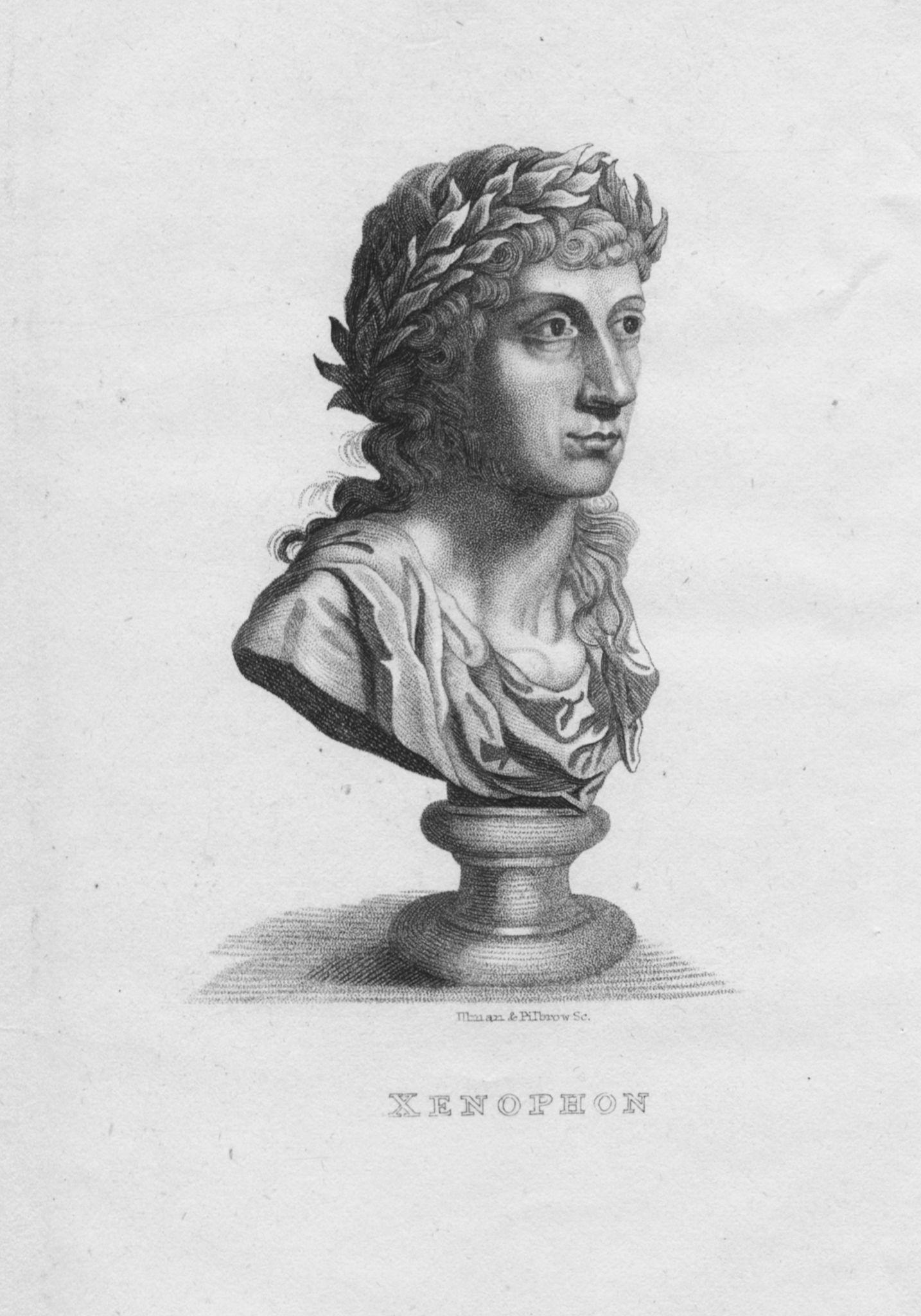
Memorabilia
Ἀπομνημονεύματα (Apomnēmoneúmata)
Xenophon’s tribute to Socrates—part defense, part biography, part handbook of character—showing how a great teacher forms virtue through self-control and daily practice.
Summary
Xenophon’s Memorabilia is best read as a portrait of philosophy in street clothes. Where Plato often dramatizes Socrates at the edge of metaphysics, Xenophon shows him in the ordinary world—talking to friends, advising young men, correcting arrogance, praising discipline, and insisting that virtue is not theatre but training.
The book opens with a clear purpose: Xenophon wants to refute the popular image that led to Socrates’ condemnation. He begins by quoting the indictment—impiety and corruption of the youth—and then argues that anyone who actually watched Socrates would have seen the opposite: a man who honored the gods, respected moral limits, and made people more responsible, not less.
From there, Memorabilia becomes a long series of “exhibits”: short episodes meant to show what Socrates was like and what he cared about. A recurring theme is self-control (enkrateia). Xenophon’s Socrates treats self-mastery as the foundation of every higher excellence. Without it, talent becomes noise, pleasure becomes a leash, and ambition becomes a trap. The truly free person is not the one who can do whatever he wants, but the one who can govern wanting.
Another theme is Socrates as a builder of competence. He pushes people to become useful—steady in work, reliable in promises, disciplined in training, serious about learning. There is a moral edge to this practicality: it is not “productivity culture,” but a claim that a disordered life produces a disordered soul. Carelessness in small things becomes carelessness in great ones.
Xenophon also emphasizes piety and order. Socrates argues that the world is not random and that human life is structured by goods we did not invent—reason, community, and the conditions for flourishing. In several conversations he uses design-like reasoning: if our bodies and capacities are fitted for life, it is rational to treat the cosmos as ordered, and to approach the divine with reverence rather than cynicism.
Across Books II and III, the dialogue broadens into civic and personal counsel: how to choose friends, how to handle money without becoming owned by it, how to pursue honor without vanity, how to lead without swagger. In Book IV, Xenophon gives a fuller picture of Socrates as an educator—especially in his training of a student (Euthydemus) who starts confident and ends humbled, then reoriented toward genuine improvement.
The result is a distinctive Socrates: less mystical, more like a moral coach. Memorabilia argues that the best defense of a philosophy is not argument alone, but a life whose daily habits make it hard to accuse it of corruption.
Key ideas
Notable quotes
- ““Should not every man hold self-control to be the foundation of all virtue…?””
- ““Socrates is guilty of rejecting the gods acknowledged by the state… and of corrupting the youth.””
- ““Justice… and all other virtue is wisdom.””
- ““The gods do manifest a great regard… towards mankind.””
- ““The Memorabilia is a recollection of Socrates in word and deed…””
Why it matters today
*Memorabilia* feels modern because it treats moral life as **training**, not performance. It’s a book for anyone trying to build a stable character in a noisy culture—where impulses are monetized, attention is fragmented, and “confidence” often replaces competence. Xenophon’s Socrates gives a hard, clarifying standard: freedom is self-rule; wisdom must become habit; and the people you admire, befriend, and imitate quietly decide the kind of person you will become. If Plato gives you Socrates the philosophical symbol, Xenophon gives you Socrates the daily example.
Recommended for
- Readers who want the most “practical” portrait of Socrates
- Anyone focused on discipline, self-mastery, and character
- People who like philosophy tied to everyday life (work, friendship, training)
- Students comparing Xenophon’s Socrates with Plato’s Socrates
- Those interested in early arguments about design, piety, and natural order