
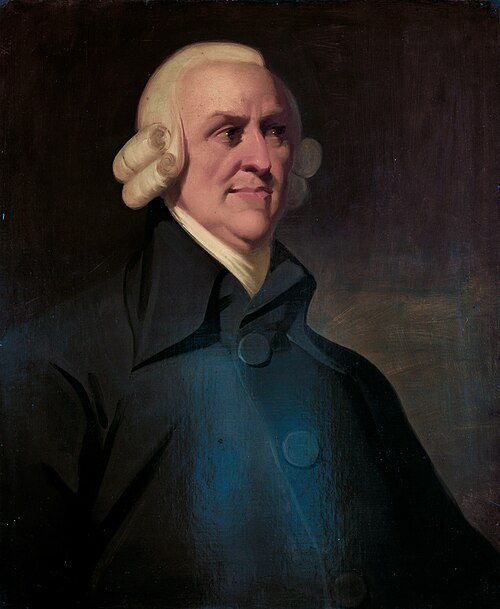
The Theory of Moral Sentiments
The Theory of Moral Sentiments
Adam Smith’s moral masterpiece explains how conscience forms: through sympathy, social judgment, and the “impartial spectator” that trains us to become fair to others and to ourselves.
Summary
Most people know Adam Smith from economics. The Theory of Moral Sentiments is the book that shows what kind of human being Smith thinks markets are built out of. It’s a moral psychology of astonishing accuracy: how we judge right and wrong, why we crave approval, and how conscience becomes a real inner authority.
Smith begins with a simple observation: even if humans are selfish, we are not sealed inside ourselves. We naturally imagine what others feel. He calls this sympathy—not sentimental kindness, but the mental capacity to “enter into” another person’s situation. This sympathetic imagination is the raw material of morality. We approve of people when their feelings and actions seem fitting to the situation; we disapprove when they seem excessive, cold, or out of proportion.
But here’s the deeper twist: we don’t only judge others. We judge ourselves through the eyes of others. Over time, we internalize a more stable standpoint—Smith’s great invention: the impartial spectator. This is the imagined, fair observer inside the mind: a conscience that asks, “If a reasonable person saw this clearly, would it be right?” The impartial spectator is not perfect (it can be distorted by culture), but it is the mechanism that turns social life into self-government.
Smith is also brutally honest about the moral traps of reputation. People want praise, not necessarily praiseworthiness. They want to be admired, not necessarily to be admirable. This creates a life of performance—status-chasing, image-management, and moral theatre. Smith’s remedy is self-command: training the mind to value the judgment of the impartial spectator over the mood of the crowd.
Justice plays a special role in the book. Smith treats justice as the minimal moral backbone of society—the line you must not cross. Beneficence (kindness) is beautiful, but it cannot be demanded the same way; justice can. When someone is harmed, resentment rises, and Smith treats that emotion as morally meaningful: it signals violated boundaries and the need for accountability.
By the end, Smith gives a complete picture of moral life: sympathy binds us to others, conscience disciplines us from within, self-command gives stability under pressure, and justice sets the non-negotiable limits that make social cooperation possible. Read today, it’s a guide to becoming a mature person in public life: less performative, more principled, and harder to manipulate by praise or blame.
Key ideas
Notable quotes
- ““How selfish soever man may be supposed, there are evidently some principles in his nature…””
- ““We endeavour to examine our own conduct as we imagine any other fair and impartial spectator would examine it.””
- ““Man naturally desires, not only to be loved, but to be lovely.””
- ““Justice… is the main pillar that upholds the whole edifice.””
- ““The real tranquillity of mind… is to be found only in the practice of virtue.””
Why it matters today
This book matters because modern life constantly pressures you to become a performer: chase validation, manage optics, react to outrage, fear being disliked. Smith gives you a stronger inner architecture: build conscience (the impartial spectator), train self-command, and judge yourself by praiseworthiness rather than applause. It also explains social conflict with rare clarity: why injustice ignites resentment, why communities need moral limits, and why trust collapses when people treat ethics as branding. If *The Wealth of Nations* explains how societies coordinate economically, *Moral Sentiments* explains how human beings become trustworthy enough to coordinate at all.
Recommended for
- Readers who want a deep, human account of conscience and moral judgment
- Anyone trying to understand shame, pride, approval-seeking, and self-control
- Leaders and founders who want an ethics framework for real social life
- Students of philosophy, economics, and political theory (Smith’s moral foundation)
- People who like Stoic self-mastery but want richer psychology